
Smithsonian National Zoo: The Complete Visitor Guide
Everything you need to know about visiting the Smithsonian National Zoo in Washington DC — giant pandas, free admission, animal exhibits, and tips for a perfect day at America's most accessible zoo.
Home of the Giant Pandas
The National Zoo is one of only a handful of places in the United States to see giant pandas.
163 Acres in Rock Creek Park
A beautifully landscaped urban oasis with wooded paths, gardens, and naturalistic habitats.
World-Class Research
The Smithsonian Conservation Biology Institute leads global efforts in species preservation and breeding programs.
Easy Metro Access
Located in the heart of Washington DC with a dedicated Metro station and walking access from downtown.
Free Admission Every Day
One of the few Smithsonian museums that is also a zoo — completely free, 364 days a year.
- Family Appeal: 9/10
- Animal Exhibits: 9/10
- Atmosphere & Setting: 9/10
- Value for Money: 10/10
- Location: Washington, DC — in Rock Creek Park
- Opened: 1889 — designed by Frederick Law Olmsted, architect of Central Park
- Hours: 8:00 AM – 5:00 PM (winter), until 7:00 PM (summer) — closed December 25
- Admission: Free — no ticket required
- Best For: Families, animal lovers, DC visitors, anyone on a budget
- Highlight: Giant pandas — the zoo's most famous residents and a global symbol of conservation
A Free World-Class Zoo in the Heart of the Nation's Capital
The Smithsonian National Zoo is one of the oldest and most respected zoological parks in the United States. Founded in 1889 and designed by Frederick Law Olmsted — the landscape architect behind New York’s Central Park — the zoo sits on 163 wooded acres in Washington DC’s Rock Creek Park. It is part of the Smithsonian Institution, which means admission is free every day of the year except December 25. No tickets, no reservations, no gates to pass through.
The zoo’s founding was driven by a dual mission: to advance the science of animal care and conservation while providing the public with an accessible window into the natural world. Congress approved the creation of the National Zoological Park in 1889, and it officially opened to the public in 1891. From the beginning, the zoo was conceived not merely as a place to display animals, but as a scientific institution dedicated to understanding animal behavior, breeding endangered species, and educating millions of visitors about wildlife conservation.
Olmsted’s original design philosophy remains evident today. The landscape flows naturally through the park’s rolling terrain, with winding paths that follow the topography rather than imposing rigid geometry. Mature trees provide shade and create intimate viewing areas. The natural setting enhances animal welfare by providing enrichment and visual complexity, while simultaneously creating a pleasant walking environment for visitors. This integration of landscape architecture and zoological science was revolutionary in the late 19th century and remains a defining characteristic of the National Zoo.
The zoo is home to more than 2,000 animals representing approximately 400 species. Its most famous residents are the giant pandas — a symbol of wildlife conservation worldwide and one of the rarest sights in any American zoo. The National Zoo has been at the center of panda conservation for decades. In 2023, new pandas arrived from China, continuing a legacy that spans over 50 years.
The panda program began in 1972 when President Richard Nixon received a pair of giant pandas as a diplomatic gift following his historic visit to China. Ling-Ling and Hsing-Hsing became instant celebrities and lived at the zoo for more than two decades. Their presence sparked American interest in wildlife conservation and cemented the zoo’s reputation as a world leader in rare species management. The current pandas continue this tradition, drawing millions of visitors and serving as ambassadors for conservation efforts in China’s bamboo forests, where wild panda populations face habitat loss and fragmentation.
But the pandas, while iconic, are only one part of the experience. The Elephant Trails exhibit is home to a multi-generational herd of Asian elephants. Opened in 2013, this expansive habitat spans several acres and includes pools, mud wallows, and varied terrain that encourages natural behaviors like foraging, socializing, and bathing. The exhibit design allows elephants to make choices throughout their day — where to walk, what to eat, and how to interact with enrichment items. Visitors can observe the herd’s complex social structure, watch calves playing under the watchful eyes of matriarchs, and learn about the urgent conservation challenges facing Asian elephants in the wild, where populations have declined dramatically due to habitat loss and human-wildlife conflict.
The Great Ape House features western lowland gorillas and orangutans in spacious indoor-outdoor habitats. The gorilla troop includes multiple generations, and observing their interactions provides insight into the sophisticated social dynamics of these intelligent primates. Silverback males demonstrate protective behaviors, mothers care for infants with remarkable gentleness, and juveniles engage in play that mirrors human children. The orangutan exhibit showcases the arboreal lifestyle of these Southeast Asian apes, with climbing structures, ropes, and enrichment activities that challenge their problem-solving abilities. Watching orangutans manipulate objects, build nests, and interact with keepers highlights their cognitive complexity and underscores why habitat destruction in Borneo and Sumatra is such a devastating conservation crisis.
American Trail follows a journey across North America with sea lions, bald eagles, beavers, and gray wolves. This exhibit opened in 2012 and represents a shift toward immersive, habitat-based displays that tell conservation stories. The California sea lions perform natural behaviors in a large pool with underwater viewing windows. North American river otters demonstrate their playful agility. Beavers construct lodges and modify their environment in ways that mirror their ecological role in the wild. Gray wolves, once nearly extinct in the lower 48 states, represent one of conservation’s great success stories. The exhibit connects visitors to the wildlife that inhabits American landscapes and emphasizes the importance of protecting these species and their habitats.
The Amazonia exhibit recreates a South American rainforest with free-flying birds, monkeys, and a massive aquarium with river fish. Opened in 1992, Amazonia was one of the first immersive tropical exhibits in an American zoo. Visitors enter a climate-controlled building where temperature and humidity mimic the Amazon basin. Birds fly freely overhead, often landing within feet of visitors. Monkeys leap through the canopy. The 55,000-gallon freshwater aquarium showcases species like piranhas, electric eels, and arapaima — one of the largest freshwater fish in the world. Amazonia is not just a display; it is an educational experience that highlights the biodiversity of rainforests and the threats they face from deforestation, climate change, and resource extraction.
The zoo is also a leading research institution. The Smithsonian Conservation Biology Institute in Front Royal, Virginia, works on species preservation, veterinary medicine, and breeding programs that have global impact. Spanning 3,200 acres, the Front Royal facility conducts cutting-edge research in reproductive sciences, animal behavior, ecology, and genetics. Scientists there have developed techniques for assisted reproduction in endangered species, including artificial insemination, embryo transfer, and cryopreservation of genetic material. These tools have been instrumental in breeding programs for species like scimitar-horned oryx, black-footed ferrets, and Przewalski’s horses — animals that were extinct or nearly extinct in the wild.
When you visit the National Zoo, you are seeing a living laboratory as much as a public attraction. Research conducted at the zoo informs animal management practices worldwide. Behavioral studies help design better habitats. Nutritional research improves animal health. Veterinary innovations save lives. The zoo publishes scientific papers, trains conservation professionals from around the world, and collaborates with international organizations on field projects. It is the most accessible world-class zoo in America — free, centrally located, and deeply committed to animals and education
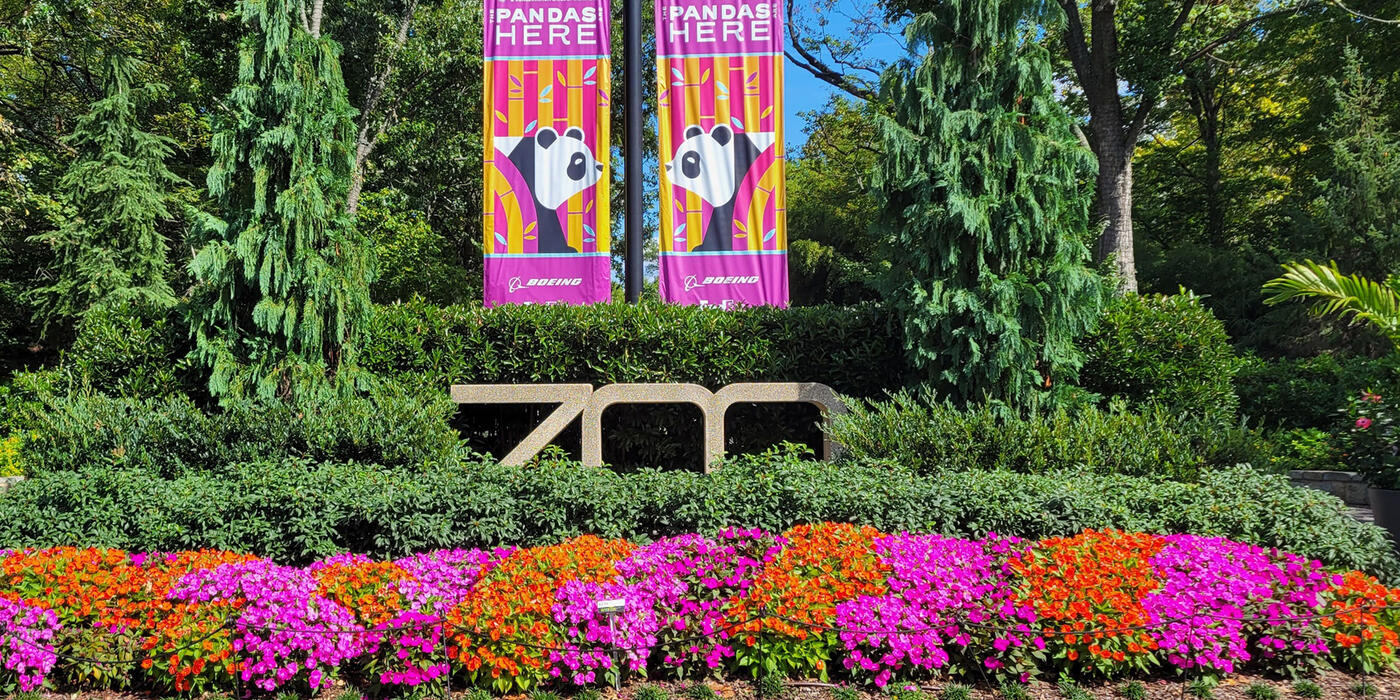
Must-See Exhibits at the National Zoo
With 163 acres and hundreds of species, these exhibits are the highlights every visitor should prioritize.

Giant Panda Habitat
The zoo's most famous residents. The panda yard includes indoor and outdoor viewing areas where visitors can watch these rare bears eat bamboo, climb, and play. The Panda House offers climate-controlled viewing year-round. Expect crowds midday — visit early.
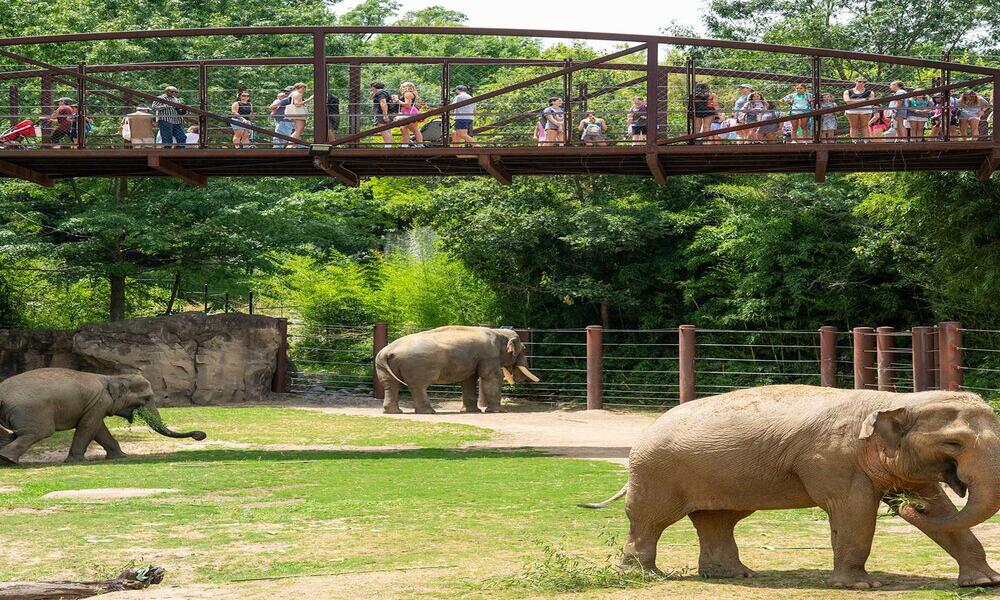
Elephant Trails
A state-of-the-art habitat housing a multi-generational herd of Asian elephants. Multiple viewing angles, an elephant bath pool, and an indoor community center with educational exhibits. The elephant training demonstrations are a highlight.
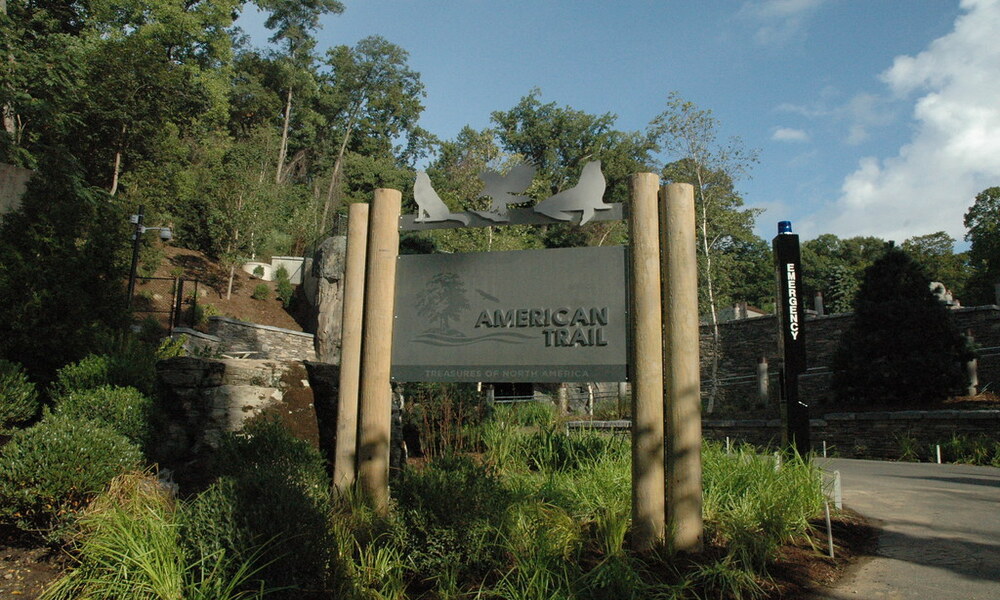
American Trail
A journey through North American ecosystems. See sea lions swimming through a glass-walled pool, bald eagles perched on branches, gray wolves in a wooded enclosure, and beavers in a pond habitat. The sea lion feedings are popular.
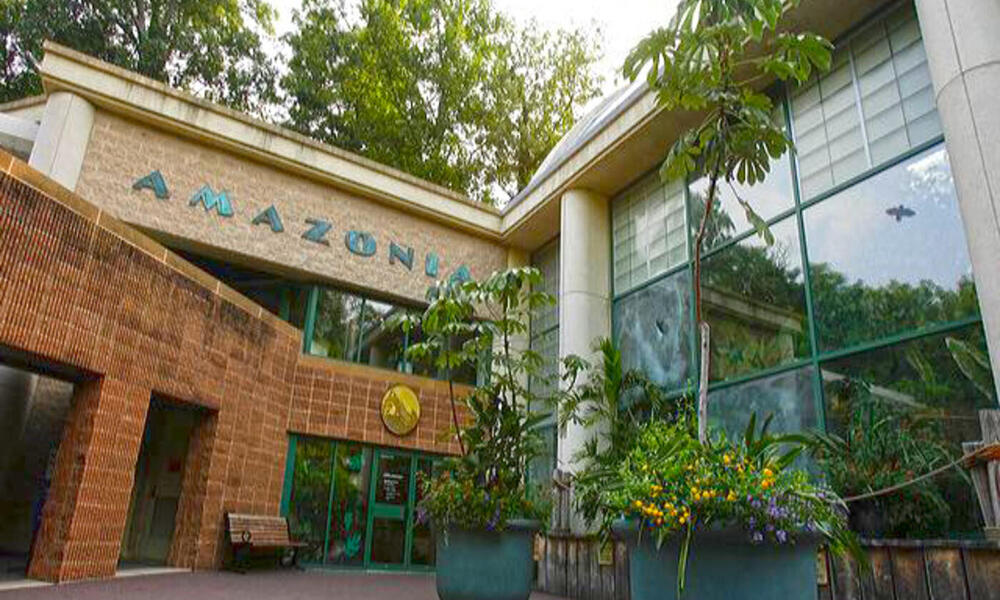
Amazonia
An immersive walk-through rainforest exhibit. Free-flying birds, golden lion tamarins, titi monkeys, and a massive aquarium with arapaima — one of the world's largest freshwater fish. Warm and humid — feels like stepping into the Amazon basin.
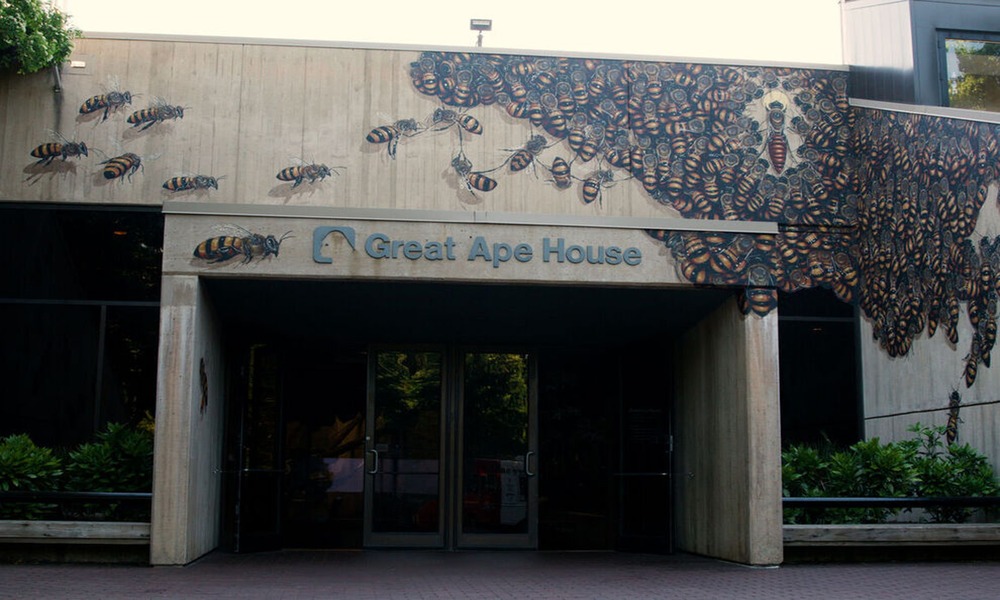
Great Ape House
Home to western lowland gorillas and orangutans. The gorillas have access to an outdoor yard with climbing structures. The orangutans use the O-Line — overhead cables that connect the Great Ape House to the Think Tank exhibit.
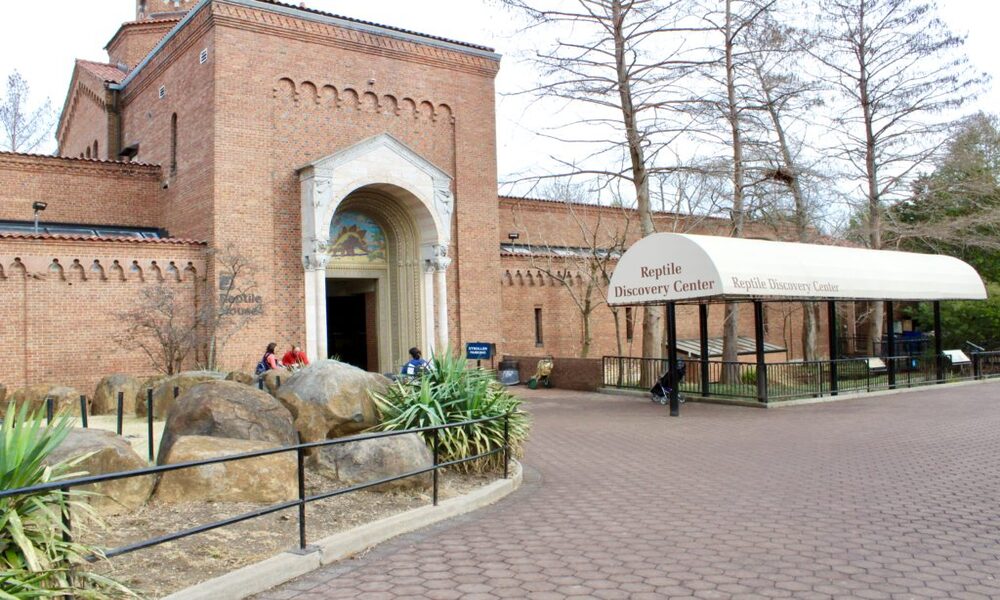
Reptile Discovery Center
A world-class collection of reptiles and amphibians. Komodo dragons, Chinese alligators, colorful poison dart frogs, and massive pythons. Indoor and climate-controlled — a good stop on hot or rainy days.
National Zoo Strategy: Getting There, Timing, and Pro Tips
The National Zoo’s free admission is both a blessing and a logistical consideration. Without ticketing or capacity limits, the zoo can get extremely crowded on weekends, holidays, and spring break. The best strategy is simple: arrive early. The zoo opens at 8:00 AM year-round, and the first two hours are the quietest and most pleasant. Animals are more active in the morning, especially in summer before the midday heat sets in.
Weekdays during the school year, particularly Tuesday through Thursday, offer the best crowd levels. Mondays can be busy with tourists starting their weekly itineraries. Fridays see an uptick as locals begin weekend plans. Saturdays and Sundays from April through October are consistently crowded, with peak traffic between 11:00 AM and 3:00 PM. If you must visit on a weekend, aim for opening time or late afternoon after 4:00 PM when families with young children begin to leave.
Weather significantly impacts crowd levels. Rainy days are surprisingly pleasant for zoo visits — many animals remain active, crowds thin dramatically, and the lush landscape looks especially vibrant. Light rain gear and waterproof shoes make drizzly days enjoyable. Extremely hot summer days (above 95°F) see lighter crowds but also less active animals. Conversely, mild spring and fall days with temperatures in the 60s and 70s are ideal for animals and humans alike, but expect larger crowds during these periods.
The zoo is built on a hillside. The main entrance on Connecticut Avenue is at the top of the hill. The lower entrance at Harvard Street is at the bottom. Walking downhill is easy. Walking back up is a workout. The zoo spans 163 acres, and the main pathway — Olmsted Walk — is a single long walkway that descends from top to bottom. Plan your route accordingly. Enter at the top, walk downhill while visiting exhibits, and exit at the bottom near the Harvard Street gate. Alternatively, use the lower entrance, walk up, and take the Metro back from the top.
The elevation change is approximately 200 feet from top to bottom, which translates to a consistent but manageable grade. Most visitors underestimate the physical demand, particularly in summer heat. Comfortable walking shoes are essential. The zoo estimates that a complete visit involves 2-3 miles of walking, though many visitors walk considerably more while exploring side paths and revisiting favorite exhibits. Benches are located throughout the park, and shaded areas provide rest stops.
The Woodley Park-Zoo/Adams Morgan Metro station on the Red Line is a short walk from the main entrance. Exit the Metro, turn right on Connecticut Avenue, and walk uphill for about five minutes. The Cleveland Park station is also nearby but involves a slightly longer walk. Driving is possible but parking is limited and costs $30. The zoo’s lots fill by mid-morning on weekends. Public transportation is strongly recommended.
If you drive, arrive before 9:00 AM to secure parking. The zoo’s Lot D (off-site) offers overflow parking and a free shuttle to the zoo entrance during peak season. Street parking in the surrounding residential neighborhoods is restricted by permit zones and time limits, and tickets are enforced aggressively. Ride-sharing drop-off works well at both the Connecticut Avenue and Harvard Street entrances, though surge pricing may apply during peak times.
Strollers and wagons are permitted but navigating the hillside paths can be challenging with heavy strollers. The zoo is fully accessible with paved pathways, though the grade is steep in sections. Wheelchairs are available to borrow at the Visitor Center on a first-come basis.
Parents with young children should consider lightweight umbrella strollers rather than large jogging strollers, which can be unwieldy on the sloped pathways. Baby changing stations are located in most restrooms, and a family restroom with more space is available near the Panda House. Nursing mothers can use the quiet areas in the Visitor Center or shaded benches throughout the zoo.
Dining options inside the zoo are adequate but unremarkable — burgers, pizza, and grab-and-go items. Many visitors bring their own food. Picnic tables are scattered throughout the park. Outside food and drinks are permitted. Water bottle refill stations are available. The zoo is in a residential neighborhood with limited nearby restaurants, so plan your meals in advance.
The Mane Restaurant near the lion exhibit offers indoor seating with air conditioning and menu items including salads, sandwiches, and kid-friendly options. Prices are typical for captive-audience venues — expect $12-15 for a basic meal. Panda Café and other kiosks sell snacks, ice cream, and beverages. Lines at food venues are longest between noon and 1:30 PM. Eating earlier or later avoids wait times.
Packing a cooler with sandwiches, fruit, and drinks is common and practical. The zoo allows soft-sided coolers and insulated bags. Glass containers and alcohol are prohibited. Picnic areas with tables are located near the American Trail, the Kids’ Farm, and along Olmsted Walk. These spots offer shade and proximity to restrooms and water fountains, making them convenient lunch stops.
Must-Do Experiences at the National Zoo
The giant pandas are the zoo’s signature attraction, and for good reason. The indoor Panda House and outdoor yards allow viewing year-round. Morning is the best time to see pandas active — they spend much of the afternoon sleeping. The cubs, when present, draw enormous crowds. The panda cams on the zoo’s website stream live footage for those who cannot visit in person.
Inside the Panda House, large windows provide views of the indoor habitat where pandas eat bamboo, play with enrichment items, and interact with keepers during training sessions. The exhibit includes educational displays about panda biology, conservation status, and the zoo’s breeding program. Pandas consume up to 40 pounds of bamboo daily, and watching them methodically strip leaves and chew stems is mesmerizing. Their apparent clumsiness belies surprising agility — pandas climb, tumble, and move with unexpected grace.
Outside, the panda yards feature climbing structures, pools, and plenty of bamboo. Pandas are most active in cooler weather, so spring and fall visits often yield better viewing than hot summer afternoons. Winter days can be excellent for panda watching, as they are adapted to cold mountain climates and seem energized by cooler temperatures. The outdoor yards offer photo opportunities without glass glare, making them ideal for capturing memorable images.
The Elephant Training Demonstrations happen daily at the Elephant Trails exhibit. Keepers work with the elephants on voluntary husbandry behaviors — presenting feet for inspection, opening mouths for dental checks, and participating in their own healthcare. It is educational, intimate, and showcases the bond between keepers and animals. Check the daily schedule on the zoo’s app or website.
These demonstrations are not performances; they are actual healthcare routines that happen regardless of audience presence. Elephants voluntarily cooperate because they trust their keepers and understand that these behaviors lead to positive reinforcement. Watching a 9,000-pound elephant gently lift a foot for examination, or open its mouth to allow dental inspection, illustrates the sophistication of modern animal training based on positive reinforcement rather than coercion.
Keepers explain each behavior, discuss elephant intelligence, and answer audience questions. The sessions typically last 15-20 minutes and occur multiple times daily. Arrive a few minutes early to secure a good viewing spot along the demonstration area fence. These talks provide insight into the daily care required for large, complex animals and highlight the professional expertise of zoo staff.
The sea lion feedings at American Trail are another daily highlight. California sea lions spin, dive, and vocalize while keepers toss fish and explain the animals’ behaviors. The underwater viewing window provides a unique perspective. The zoo also operates a seal and sea lion training program where the animals voluntarily participate in medical exams.
Sea lions are charismatic and playful, often interacting with visitors through the glass. Their speed and agility underwater contrasts with their awkward movement on land. During feeding sessions, keepers discuss sea lion biology, their role in ocean ecosystems, and conservation challenges including ocean pollution, overfishing, and entanglement in fishing gear. The sessions are entertaining while conveying important environmental messages.
The O-Line is one of the zoo’s most unique features. This overhead cable system connects the Great Ape House to the Think Tank exhibit, allowing orangutans to travel between buildings above the zoo pathways. If you look up and see an orangutan crossing overhead, you have witnessed one of the great spontaneous moments in any American zoo. The crossings are not scheduled — orangutans choose when to use the O-Line.
The cable towers stand 50 feet high, and the crossing distance spans several hundred feet. Orangutans are naturally arboreal, spending most of their lives in tree canopies. The O-Line allows them to exhibit this natural behavior in an environment that would otherwise lack vertical space. Sometimes orangutans cross quickly; other times they pause midway, hanging from the cables and surveying the scene below. Their decision to cross is entirely voluntary, reflecting the zoo’s commitment to allowing animals agency in their daily routines.
The Think Tank building, connected by the O-Line, houses interactive exhibits about animal cognition. Visitors can explore how animals think, solve problems, and communicate. The exhibits are designed for all ages, with hands-on activities that challenge participants to think like an animal and consider problems from non-human perspectives.
The Zoo in Your Neighborhood program and the Smithsonian’s ongoing conservation work are highlighted in exhibits throughout the park. The zoo is not just displaying animals — it is actively working to protect them in the wild. The educational signage reflects this mission and is worth reading as you explore.
Conservation messages are woven throughout the zoo experience. Signs explain how individual actions — choosing sustainable seafood, reducing plastic use, supporting conservation organizations — contribute to protecting wildlife. The zoo participates in field conservation projects on six continents, working with local communities to protect habitats and endangered species. Staff members often spend time in the field, conducting research and collaborating with international partners. This global reach transforms the zoo from a static collection of animals into an active force for conservation.
Combining the Zoo with a Washington DC Visit
The National Zoo is in northwest Washington DC, about three miles from the National Mall. It pairs naturally with a broader Smithsonian museum visit. The zoo is part of the Smithsonian system, and like all Smithsonian museums, admission is free. A morning at the zoo followed by an afternoon at the National Museum of Natural History or the National Air and Space Museum is a classic DC family itinerary.
The Natural History Museum houses the world’s largest natural history collection, including the Hope Diamond, dinosaur fossils, and extensive exhibits on human evolution, geology, and ocean life. The Hall of Mammals complements the zoo visit by showcasing mounted specimens and dioramas depicting animals in their natural habitats. The museum is located on the National Mall, easily accessible via Metro.
The National Air and Space Museum, currently undergoing renovations with several galleries reopened, displays historic aircraft and spacecraft. The combination of seeing live animals at the zoo and exploring the technology that took humans to the moon creates a memorable educational day. Both museums are free, though timed-entry passes may be required during peak tourist season.
The zoo’s Woodley Park neighborhood has several good dining options. Open City is a popular diner near the Metro station, serving breakfast all day, burgers, and comfort food in a casual atmosphere. Lebanese Taverna serves excellent Middle Eastern food, including mezze platters, kebabs, and fresh salads. For a splurge, the Michelin-starred Bresca is a short walk away, offering innovative contemporary American cuisine with seasonal ingredients and creative presentations. Reservations are essential for Bresca.
Other nearby dining includes &pizza for customizable personal pizzas, Tail Up Goat for Mediterranean-inspired small plates, and Laliguras for Nepalese cuisine. The neighborhood caters to locals and visitors alike, with options ranging from quick casual to upscale dining. Woodley Park’s walkable streets and proximity to the Metro make post-zoo meals convenient.
The National Cathedral, with its stunning Gothic architecture and gardens, is less than a mile from the zoo and also free to visit. Construction began in 1907 and continued for 83 years, resulting in a masterpiece of neo-Gothic design with flying buttresses, intricate stone carvings, and breathtaking stained glass. The cathedral grounds include beautiful gardens, walking paths, and panoramic views of Washington DC. Tours are available, and the cathedral hosts concerts, lectures, and special events throughout the year.
Rock Creek Park, which surrounds the zoo, offers hiking trails, a nature center, and the historic Peirce Mill. It is one of the oldest and largest urban parks in the United States and a peaceful retreat from the city.
The park encompasses over 1,700 acres of forest, meadows, and streams. Hiking trails range from easy strolls to more challenging routes through wooded hillsides. The Rock Creek Nature Center provides educational exhibits about local ecology, wildlife, and the park’s history. Peirce Mill, a restored 19th-century water-powered grist mill, offers a glimpse into pre-industrial milling operations and occasionally grinds grain using historic techniques.
Combining a morning zoo visit with an afternoon hike in Rock Creek Park creates a full day immersed in nature without leaving the city. Birdwatching is excellent in the park, with over 200 species recorded. The park also contains historic sites, picnic areas, and a planetarium at the Nature Center.
Parking at the zoo is limited and expensive. The Metro is the best way to arrive. If you are driving to DC, park at your hotel or at a suburban Metro station and take the train in. DC’s Metro system is clean, safe, and connects all major attractions. The zoo is also accessible by Capital Bikeshare and several bus routes. Ride-sharing services can drop off and pick up at both zoo entrances.
Capital Bikeshare stations are located near both zoo entrances and throughout the Woodley Park neighborhood. Biking to the zoo offers flexibility and avoids parking hassles. The Rock Creek Trail, a paved multi-use path, runs through the park and connects to the broader regional trail network, making it possible to bike to the zoo from many parts of the city.
Bus routes including the L1, L2, and H4 serve the zoo and connect to various Metro stations. These routes are less crowded than the Red Line during rush hour and provide an alternative public transit option. The DC Circulator bus system also operates routes connecting major tourist destinations, though none directly serve the zoo.
Frequently Asked Questions
Is the National Zoo really free?
Yes. The zoo is part of the Smithsonian Institution and charges no admission. No tickets or reservations are required. The zoo is open 364 days a year, closed only on December 25.
How long does it take to see the zoo?
Most visitors spend 2 to 4 hours. The zoo is large and hilly, and seeing everything requires significant walking. A full day allows a leisurely pace with meal breaks and time to revisit favorite exhibits.
Are the pandas always visible?
Pandas may be indoors or outdoors depending on weather and individual preference. The indoor Panda House offers viewing year-round. The pandas are most active in the morning. The zoo’s panda cams stream live online.
Is the zoo accessible for strollers and wheelchairs?
Yes, the zoo is fully accessible with paved pathways, though the hills are steep in sections. Strollers and wagons are permitted. Wheelchairs are available to borrow at the Visitor Center on a first-come basis. Manual wheelchairs are free. Electric scooters are not available for rent at the zoo.
Is there food available at the zoo?
Yes. Several cafes serve burgers, pizza, sandwiches, and snacks. Food quality is adequate. Many visitors bring their own food and use picnic tables throughout the park. Outside food and drinks are permitted.
What is the best time of year to visit?
Spring and fall offer pleasant weather and active animals. Cherry blossom season in late March and early April is beautiful but extremely crowded. Summer is hot and humid — arrive early. Winter is quiet and mild, though some animals may be less active.